With its economic power and technological capabilities, Taiwan is a crucial actor in the Indo-Pacific and a like-minded partner for Europe. The main aim of my fieldwork in Taiwan was to gain, through interviews and research at several libraries, new insights into Taiwan’s agency in the Indo-Pacific and the prospects for deepening Taipei’s relations with Europe, particularly with the Central and Eastern European (CEE) countries. Generously funded by the Taiwan Chair project at Palacký University Olomouc, the fieldwork was conducted in May 2026 (3-6 and 26-31 May).
The research topics examined in Taiwan align with my ongoing work on geopolitical and geo-economic developments in the Indo-Pacific, especially how U.S.-China competition impacts the regional rules-based order and how democratic actors – both regional and external actors – can maintain the existing order. The COVID-19 pandemic and Russia’s illegal invasion of Ukraine have underscored that the European Union and Taiwan are like-minded partners with shared strategic interests who stand to benefit from closer collaboration.
I conducted interviews with local experts and European diplomats about Taiwan’s role in the Indo-Pacific, particularly in Southeast Asia, a region of mutual interest to Taiwan and Europe, and about Europe-Taiwan relations in politics, security, economy, technology, and academia. Notably, Czechia has strong ties with Taiwan dating back to the presidency of Václav Havel, a credible proponent of a values-based foreign policy in which the promotion of democracy and human rights featured prominently. Slovakia and Austria also maintain close economic relations with the self-governed island, though political relations remain underdeveloped.
A key result of my research was that CEE countries are strong in specific economic and technological niches where they can offer Taiwan as well as other Indo-Pacific partners world-class products or services. Another finding, highlighted by several interviewees, was the need for both Taiwan and the EU to deliver tangible benefits rather than simply announce ambitious but unrealistic projects.
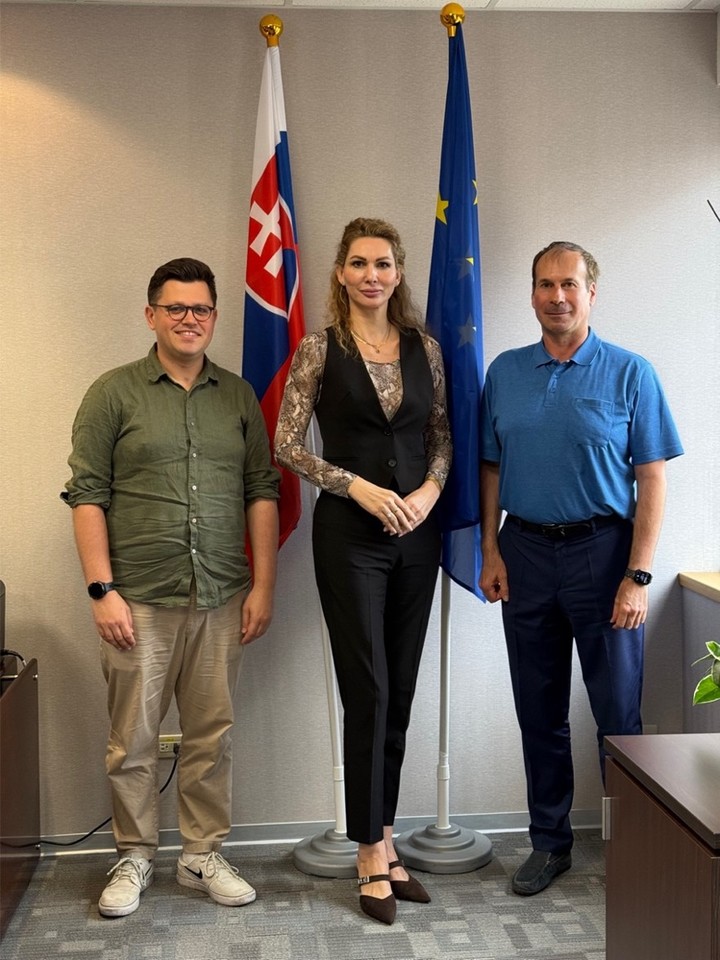
In this context, interviews with the Slovak and Austrian representatives in Taiwan, Lucia Langer and Christian Helbig, were extremely insightful. We discussed the current state of bilateral relations with Taiwan and how they can be further improved, while also identifying various obstacles to doing so. All interview partners emphasized the close collaboration among Central European countries, which increases the visibility and leverage of these small countries who compete with bigger European and other countries for influence. Discussions with diplomats and local journalists confirmed many of my previous findings on the state of the political, economic, security, cultural, and academic relations between Taiwan and Central Eastern Europe, published by the Central European Institute of Asian Studies. Most importantly, they also yielded many new insights about how both sides could deepen the relations, not least through more visits and the implementation of specific projects.
Thanks to additional informal conversations with local experts, I gained valuable insights into Taiwan's foreign policy overall, its sophisticated use of soft power, its relations with the United States and China, and its technological advancement, notably in the realm of semiconductors. Another topic was the domestic political system, which is relevant to my role as co-convener of a course on political systems in the Indo-Pacific offered by the Department of Asian Studies.
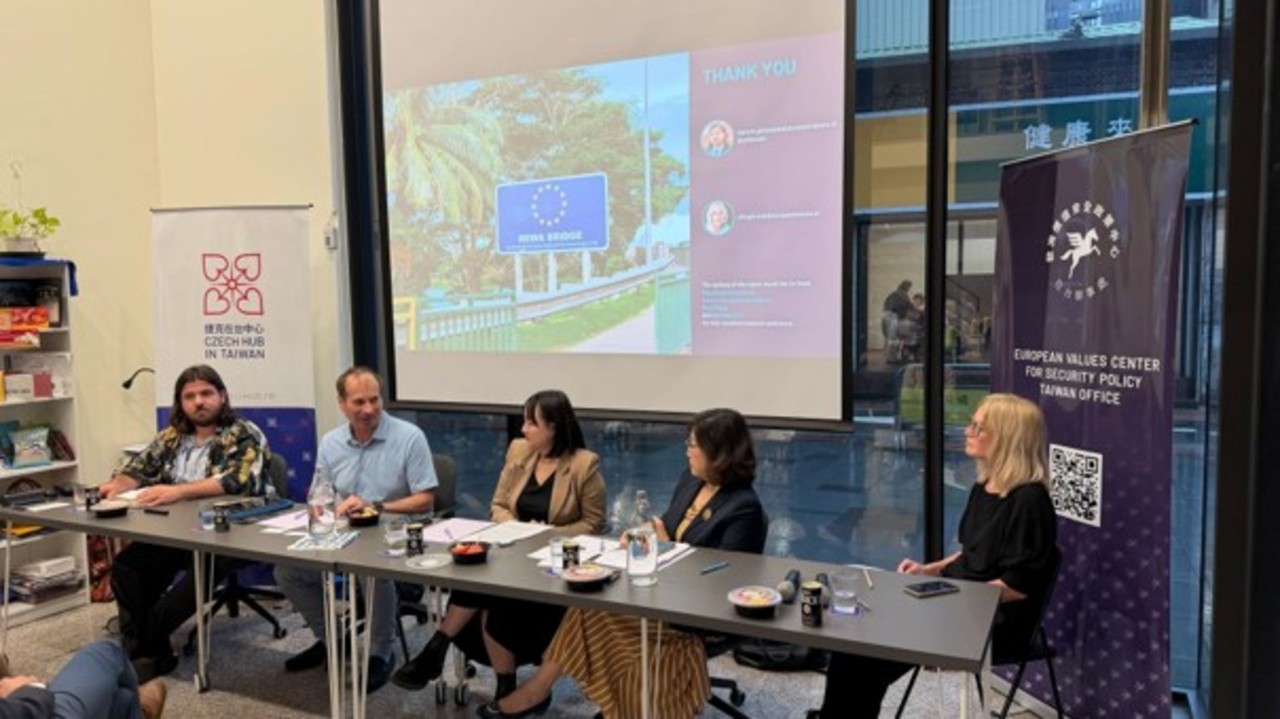
A highlight of the fieldwork in Taiwan – and evidence of close Central and Eastern European cooperation in academia – was my participation in the panel “Beyond Resolutions: Bridging Global Gateway and the New Southbound Policy in the Indo-Pacific“, organized by the European Values Center for Security Policy Taiwan Office in Taipei and moderated by Olimpia Kot. Together with Kristy Hsu, director of the Taiwan ASEAN Studies Center (Chung-Hua Institution for Economic Research), Peifen Hsieh, deputy director of the Department of International Affairs of the Democratic Progressive Party, and Marcin Jerzewski, we identified high-quality infrastructure areas, such as green technology and education, and priority countries, such as Malaysia and Vietnam, where Taiwan-European infrastructure cooperation would yield beneficial results for these countries and for other partners across Southeast Asia. To this end, Taipei‘s New Southbound Policy and Brussels‘ Global Gateway Initiative need to be better aligned to avoid overlap and duplication. Given Taiwan‘s decades of experience in building infrastructure in the Indo-Pacific, the EU can benefit from Taiwanese expertise. Exploring how Taiwan-EU collaboration on infrastructure and connectivity can be improved would be a promising research project to pursue with Taiwanese partners.
I am very grateful that the Global Taiwan Chair project offered me the invaluable opportunity to discuss my research results, gain new insights and expertise through library research and interviews with European diplomats and local experts, and deepen my academic networks in Taiwan which will be instrumental for conducting joint academic activities, possibly including joint research projects, in the near future.