In spring 2026, I travelled to Taipei for a short 10-day fieldwork trip. While my research usually covers a range of topics in international relations and human rights, this visit focused specifically on human rights in Taiwan.
During the trip, I conducted several anonymous interviews on two topics, women’s political participation and the practice of the death penalty in Taiwan. I also held meetings and institutional visits to discuss possibilities for future collaboration. In addition, I gave a guest lecture at National Taiwan Normal University (NTNU/Shida) on the human rights landscape in Taiwan.
Women’s political representation
I have previously conducted research on women’s political participation in Taiwan, which stands out as one of the more gender-equal political systems in Asia and beyond. Taiwan has had a woman president, Tsai Ing-wen, currently has a woman vice president, Hsiao Bi-khim, includes women in the cabinet, and has women holding nearly 42% of legislative seats.
This time, however, my focus was on a recent reform aimed at strengthening women’s political representation at the local level. In November 2025, Taiwan’s legislature passed amendments to the Local Government Act concerning gender quotas. Although the changes did not attract much public attention, they are likely to have a lasting positive impact on women’s participation in local politics — an area where Taiwan has historically lagged behind its otherwise strong record on gender equality.
The findings from my research and interviews will be reflected in a short analytical piece to be published by CEIAS in June.
The death penalty and human rights dialogue
The second strand of my fieldwork focused on the death penalty. I conducted interviews on this topic, with particular attention to why capital punishment remains legally and politically resilient in Taiwan despite the country’s strong democratic credentials and its close human rights dialogue with the European Union (EU).
The issue became especially salient after Taiwan resumed executions in January 2025, following a five-year moratorium. The EU has repeatedly urged Taiwan to maintain a de facto moratorium, strengthen procedural safeguards, and move towards full abolition. Taiwan has also incorporated the International Covenant on Civil and Political Rights (ICCPR) into domestic law. Yet capital punishment remains in place.
This raises an important question for my broader research: why does sustained external pressure (from the EU) on human rights fail to produce abolition in a strategically aligned democracy? The interviews conducted during this trip will feed into an academic article on the issue, which will take longer to develop and publish than the shorter analytical outputs from the fieldwork.
Remembering Taiwan’s democratization
Beyond interviews, the fieldwork also included visits to two sites closely connected to Taiwan’s democratization. At the National Chiang Kai-shek Memorial Hall, I visited the permanent exhibition Flowers of Freedom, which presents Taiwan’s democratic journey in a broader global context and reflects on the future of freedom and democracy.
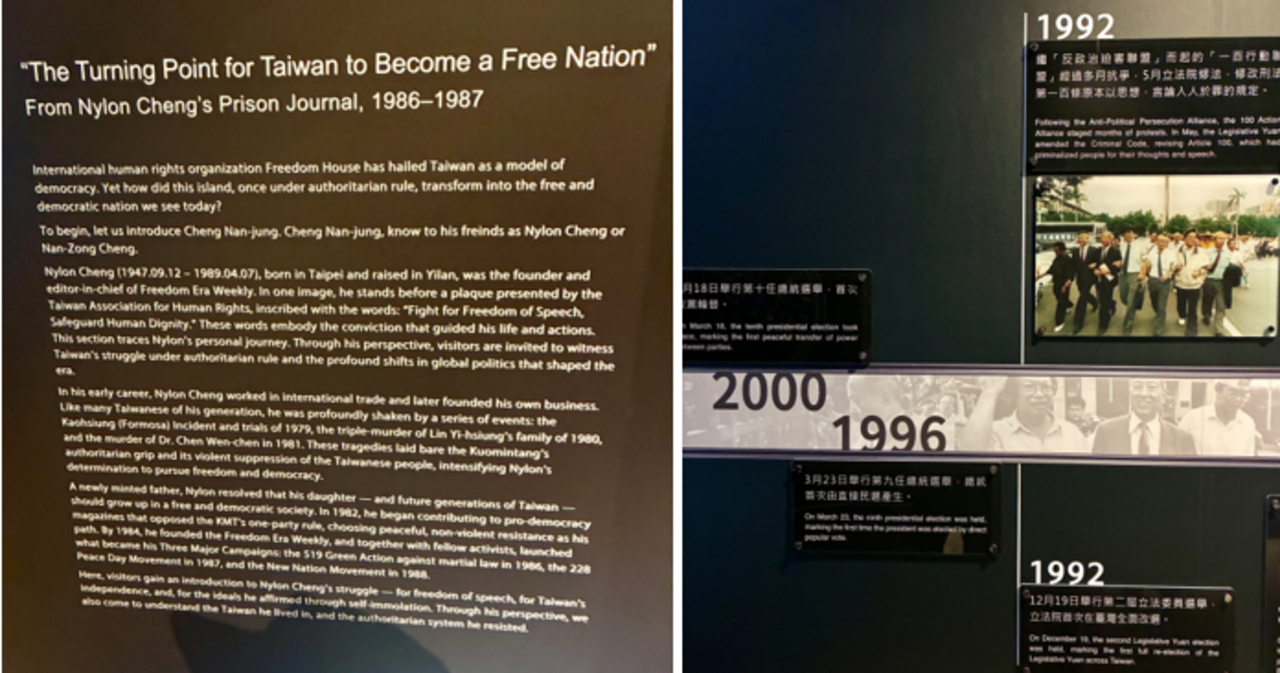
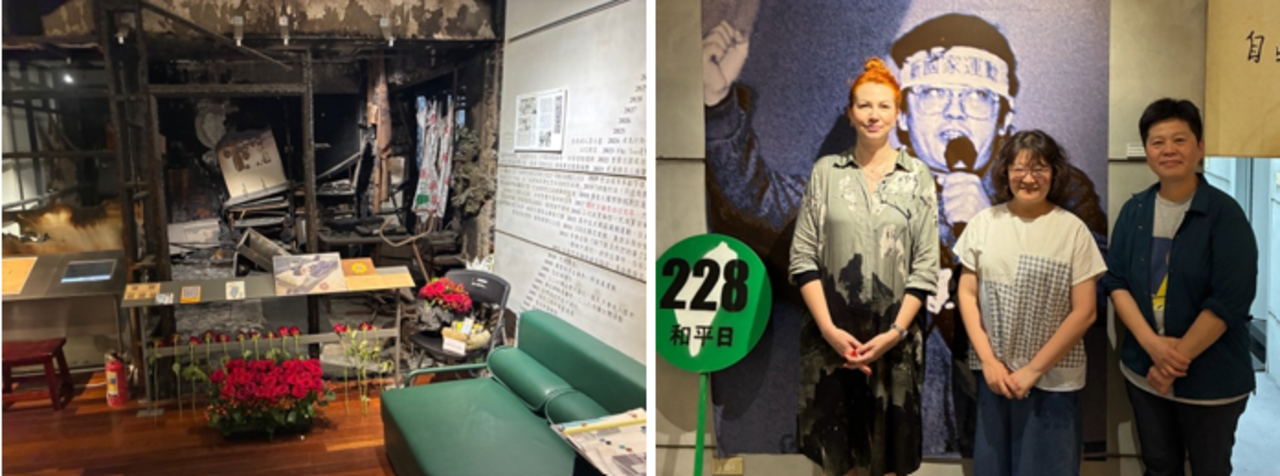
I also visited the Nylon Cheng Liberty Foundation and Museum, dedicated to the life and legacy of Nylon Cheng (Cheng Nan-jung), one of the most important figures in Taiwan’s democratization movement. I had the opportunity to meet with his daughter, Chu-mei Cheng, and learn more about her father's activism, his role in Taiwan’s struggle for freedom of expression, and the continued relevance of his legacy for Taiwan’s democracy today.
Academic exchange and future collaboration
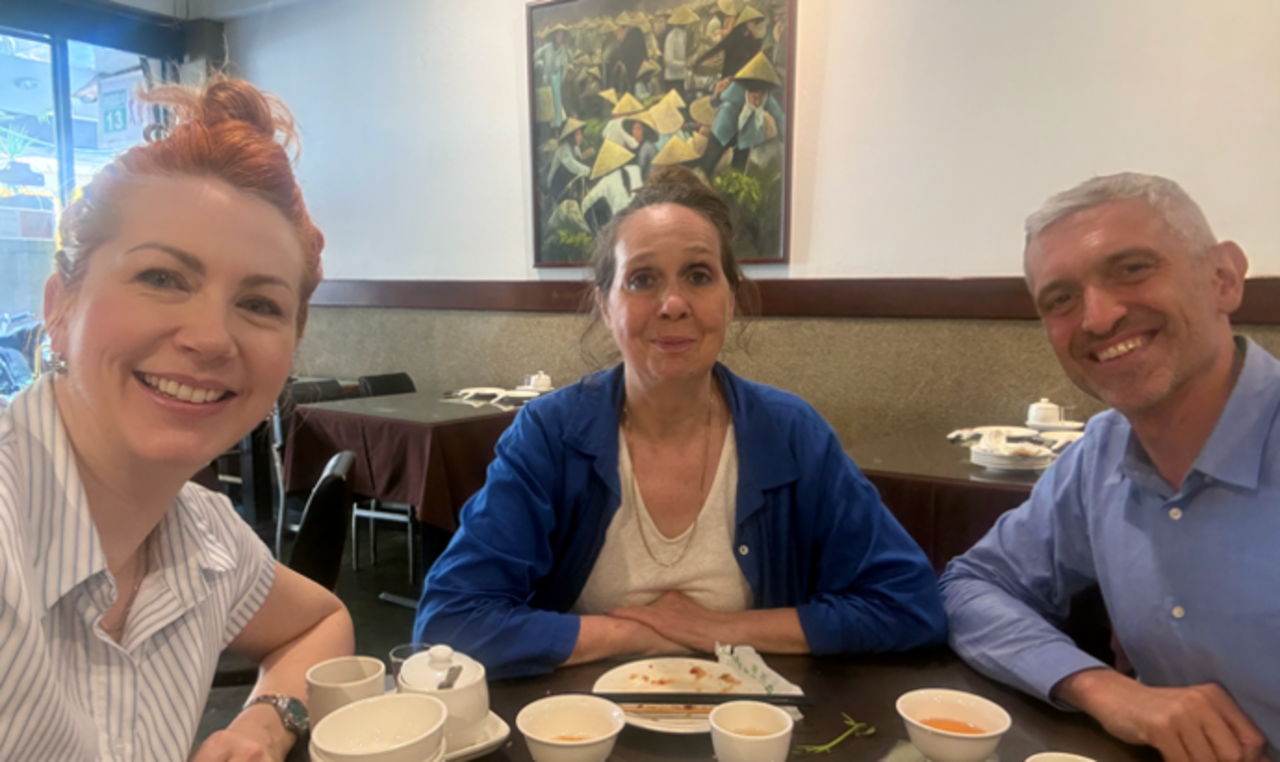
The trip also created space for discussing future academic cooperation. I met with Ann Heylen from National Taiwan Normal University and Corrado Neri from the French Centre for Research on Contemporary China at Academia Sinica to discuss possible future projects and collaboration.
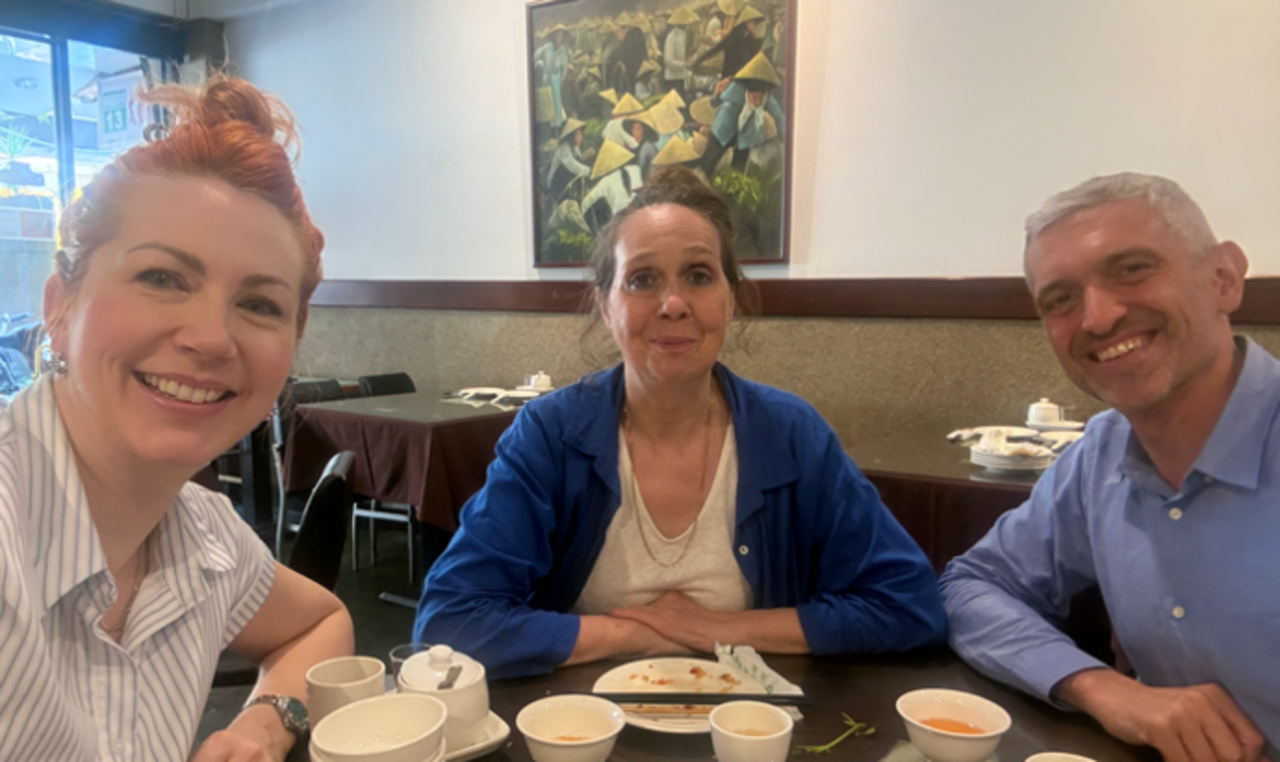
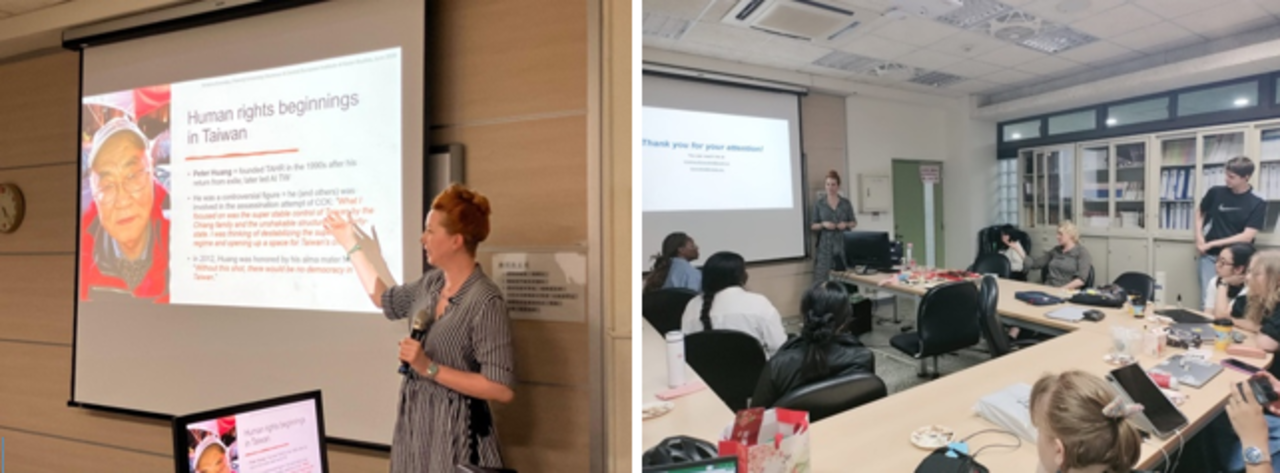
Finally, I gave a guest lecture at National Taiwan Normal University, at the invitation of Ann Heylen, titled “Human Rights in Taiwan: What are the roadblocks in an otherwise progressive path?” The lecture drew on a chapter from my recent book, Contemporary Taiwan: More than a Flashpoint, and discussed the tensions between Taiwan’s progressive democratic image and the remaining human rights challenges it continues to face.